
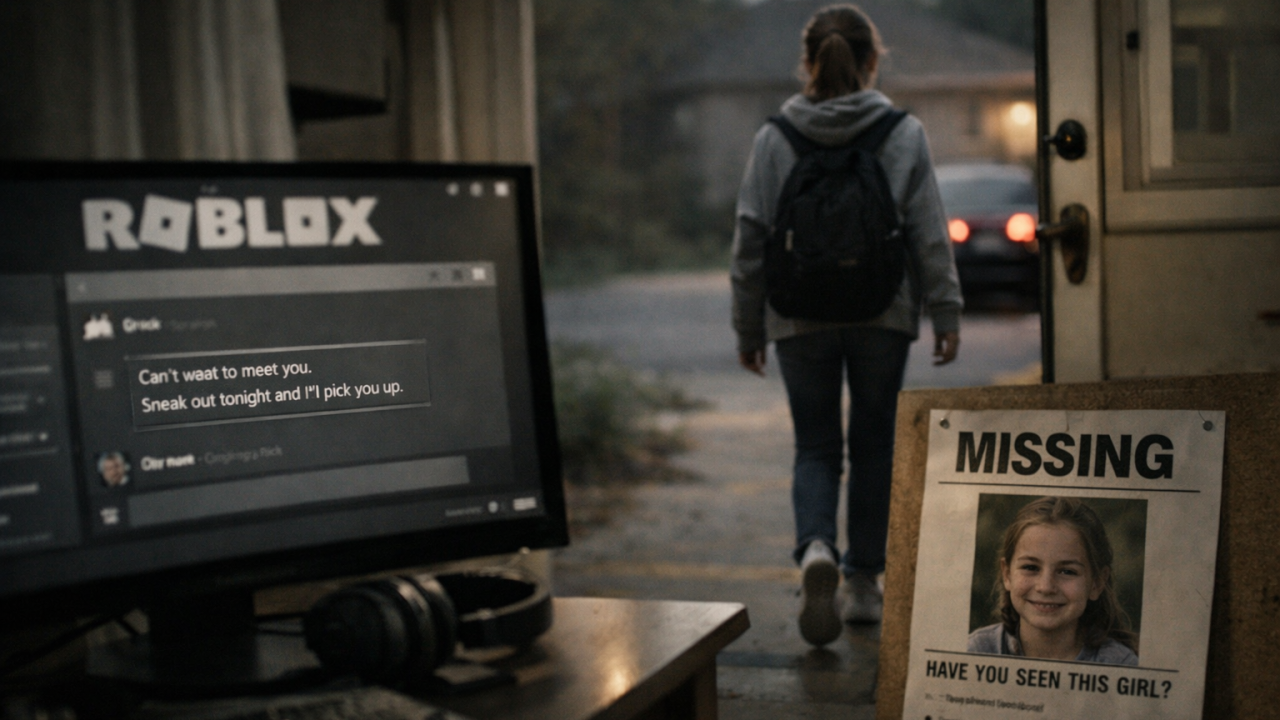
Roblox is not safe for children, and we need to stop calling it a game
Roblox is not just a game. It is a large-scale social platform that puts children into open interaction with strangers, and the risk is structural, not accidental.
Roblox is often described as a children''s game. That label feels comforting. It suggests play, creativity, and safety.
But it''s misleading.
Roblox is not just a game. It is a large-scale social platform that allows children to interact with strangers in real time. And when children are placed inside open social systems, risk is not accidental, it is structural.
The real danger is access, not screens
Most online harm to children doesn''t come from hacking or technical breaches. It comes from direct access.
On Roblox, children can chat, receive friend requests, join role-play environments, and be encouraged to move conversations off-platform. Predators don''t need to break the system. They use it exactly as designed.
They blend in through play. They build trust slowly. They normalise personal questions.
This is grooming, enabled by scale, anonymity, and constant interaction.
Safety features don''t make a platform safe
Roblox has added parental controls and messaging restrictions over time. These are often presented as reassurance.
But safety tools only work if parents understand the threat, configure settings correctly, and actively supervise use. Many families treat Roblox as background entertainment rather than a high-risk social environment. Children should not be there in the first place.
A platform that requires constant vigilance to remain safe is not inherently safe for children.
This is also a cybersecurity issue
Roblox sits at the intersection of child safety and cybersecurity.
Children are exposed to account takeovers from password reuse, phishing and ''free Robux'' scams, impersonation of moderators or developers, social engineering disguised as friendship, and pressure to move to private or off-platform chats.
These are not technical attacks. They are human exploits, and children are the easiest users to manipulate online.
Children cannot consent to long-term harm
Even when no obvious abuse occurs, children share sensitive information through conversation and behaviour: age, routines, emotions, vulnerabilities.
They cannot understand how this data accumulates or how it may be misused later. Treating children''s data like a smaller version of adult data ignores the long-term impact of early exposure.
We need to change how we talk about this
Children should not be using Roblox. Calling Roblox ''just a game'' minimises its risks and lowers adult vigilance.
This isn''t anti-technology. It''s anti-denial.
When platforms scale social interaction with children, safety is not a feature, it''s a responsibility. And pretending otherwise puts children at risk.
Free CyberSafety training for every Australian family
Video lessons, downloadable guides and completion certificates — all free, forever.
Start free training